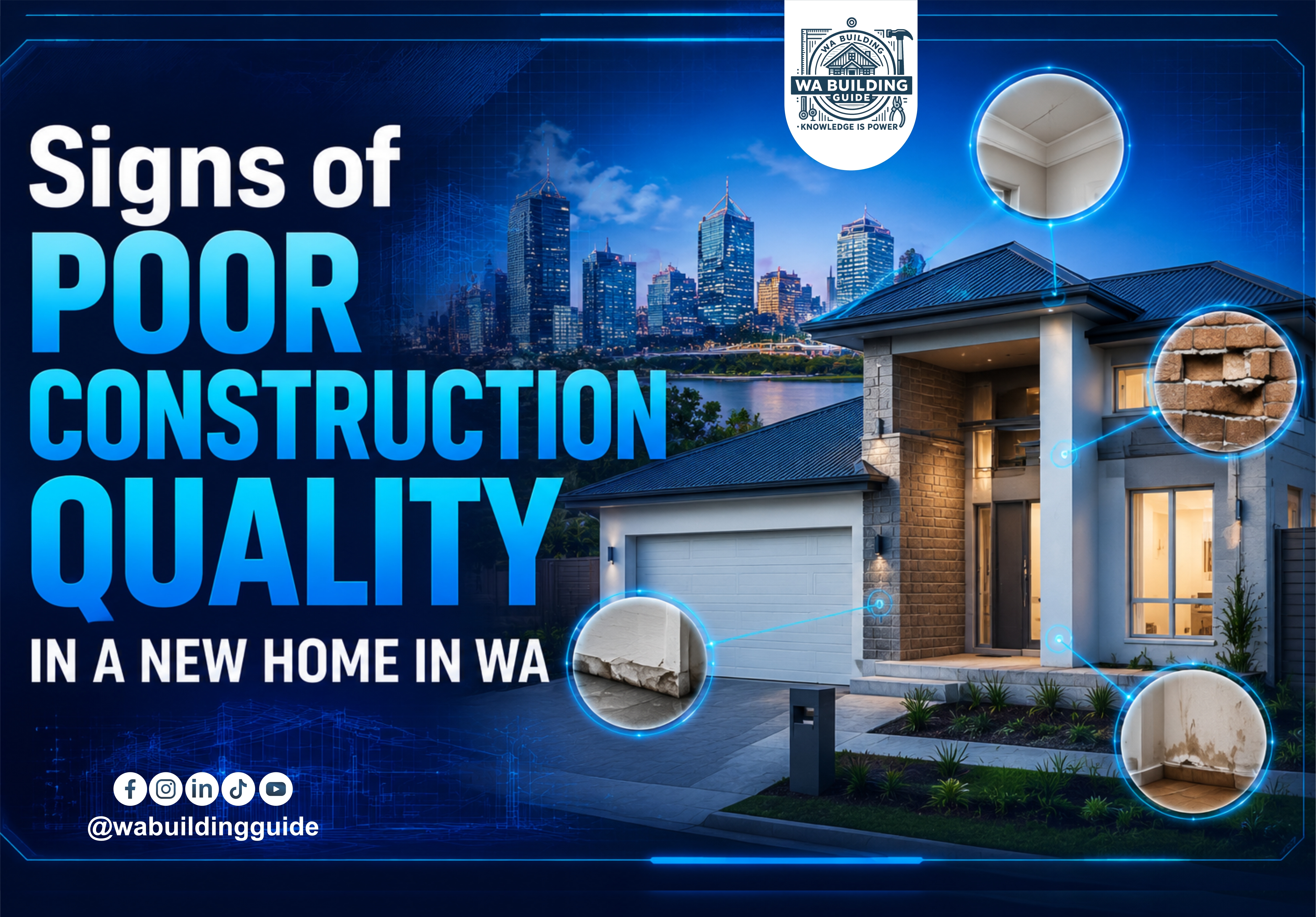
Signs of Poor Construction Quality in a New Home in Western Australia
Buying a new home in Western Australia is one of the biggest financial decisions you'll ever make. Whether you're building in Perth's outer suburbs, the South West, or the Pilbara, you'd expect a brand-new home to be built properly. Unfortunately, poor construction quality in new homes across WA is far more common than most buyers realise and the signs aren't always obvious until serious damage has already been done.
With Western Australia's unique climate conditions from Perth's hot, dry summers and wet winters to the tropical humidity of the north and the harsh coastal environments of Geraldton and Mandurah the demands on residential construction are significant. When builders cut corners or rush to meet handover deadlines, homeowners are left with defects that can compromise structural integrity, habitability, and long-term property value.
This guide covers the most important warning signs of poor construction quality in a new WA home, what causes them, and what your rights are under Western Australian law.
Why New Homes in WA Can Still Have Serious Defects?
Many buyers assume that because a home is brand new, it's free from faults. But new construction homes in Western Australia are far from immune to defects. In fact, the Building Commission of Western Australia receives thousands of complaints about residential construction each year.
Key reasons why new homes develop defects include:
Pressure to build fast : Perth's housing boom has stretched builders and their subcontractors thin, leading to rushed work and reduced oversight on site.
Subcontractor reliance : Most builders coordinate a network of independent tradespeople for plumbing, electrical, roofing, and tiling. When supervision is inadequate, mistakes are easy to miss.
Material substitution : Cost pressures sometimes lead to lower-grade materials being used without the buyer's knowledge.
WA's extreme climate variability: The state's diverse climate zones place different and demanding requirements on construction. Homes built to minimum standards may perform poorly in Perth's coastal salt air, the South West's wet winters, or the Kimberley's cyclone season.
Skills shortages : A persistent shortage of qualified tradespeople across WA has contributed to a decline in on-site workmanship quality.
12 Warning Signs of Poor Construction Quality in Your New WA Home
1. Cracking in Walls, Ceilings, and the Slab
Cracking is one of the most visible and commonly reported signs of poor construction in new WA homes. While hairline shrinkage cracks in plasterwork can be normal in the first year, more significant cracking should never be dismissed.
Red flags to look for:
Diagonal cracks running from the corners of windows and door frames
Cracks wider than 2–3mm in internal walls or ceilings
Stair-step cracking in brickwork
Cracking along the junction of walls and ceilings
Visible cracks in the concrete slab or garage floor
In Perth and surrounding suburbs, reactive clay soils and seasonal moisture changes are common contributors to slab movement and cracking when proper soil testing and footing design haven't been carried out. Under AS 2870 (the Australian Standard for residential slabs and footings), builders are required to account for site soil conditions failure to do so is a construction defect.
2. Water Penetration and Moisture Problems
Water damage is the single most costly and destructive defect type in Western Australian residential construction. Perth's winter rainfall, combined with the state's coastal exposure and humid northern conditions, makes waterproofing one of the most critical elements of any new build.
Warning signs of water intrusion:
Water stains on internal walls, ceilings, or around window frames after rain
Wet or damp patches in the roof space or ceiling after rainfall
Moisture or mould appearing in bathrooms, laundries, or wet areas within months of handover
Damp patches on internal floor slabs, particularly in entry areas or rooms adjacent to bathrooms
Water pooling near the home's footings after heavy rain
Efflorescence (white salt deposits) on brickwork a sign of moisture tracking through masonry
Wet area waterproofing (bathrooms, laundries, and alfresco areas) is a critical code requirement under the National Construction Code (NCC) as adopted in WA. Defective waterproofing membranes are among the most frequently cited construction defects in Western Australia.
3. Roof Defects and Leaks
In Western Australia, a defective roof can mean anything from missing mortar on ridge capping to poorly installed roof sheets, and it can cause extensive damage before you ever notice it inside the home.
Signs of poor roofing workmanship:
Water stains or wet patches in the ceiling, especially after rain
Missing, cracked, or displaced roof tiles or sheets
Poorly bedded or cracked mortar on ridge cappings and hip ends
Inadequate or missing flashings around skylights, penetrations, and wall junctions
Sagging or uneven roofline
Roof space condensation or moisture on roof timbers
Gutters and downpipes that don't drain effectively, causing overflow toward the home
In cyclone-prone areas of WA (north of the 26th parallel, which includes areas like Geraldton, Exmouth, Broome, and Port Hedland), roofing must comply with specific cyclonic wind ratings under AS 4055 and AS 1684. Failure to meet these standards in cyclone-risk zones is both a construction defect and a serious safety hazard.
4. Brickwork and Masonry Defects
Most homes in Perth and regional WA are built using brick veneer or double brick construction. The quality of brickwork has a direct impact on the structural performance, water resistance, and thermal efficiency of the home.
Brickwork defects to identify:
Uneven mortar joints or inconsistent joint widths
Efflorescence (white salt staining) on external brick surfaces
Brick ties that are missing or inadequately installed (these hold brick veneer to the frame a critical structural element)
Mortar that is crumbling or not fully filling joints
Cracking at corners, window reveals, or above lintels
Walls that are visibly out of plumb or not straight when viewed along their length
Missing or incorrectly positioned weep holes in brick veneer walls (these allow moisture to drain and must be present above flashing locations)
Missing weep holes and incorrect brick tie installation are particularly common defects in WA brick veneer homes and can lead to significant moisture entrapment within wall cavities.
5. Structural Frame Defects
In timber-framed homes, the structural frame is hidden behind linings and cladding making it one of the harder areas to inspect after construction is complete. Frame defects can affect the structural safety of the home and are expensive to rectify once walls are closed in.
Signs of framing defects:
Walls that bow, bulge, or are noticeably out of plumb
Ceilings that sag or are visibly uneven
Excessive floor bounce or movement, particularly in elevated homes
Doors and windows that stick, rack, or don't close squarely often a sign of frame movement
Roof or ceiling leaks that suggest rafters or battens aren't properly installed
Noisy or creaking walls in light wind
Under the National Construction Code and Australian Standard AS 1684, timber-framed residential buildings must be designed and constructed to withstand applicable loads. Defective frame construction may compromise the home's wind resistance a serious issue in WA's coastal and cyclone zones.
6. Poor Electrical Installation
All electrical work in Western Australian homes must be carried out by a licensed electrician and comply with AS/NZS 3000 (the Australian Wiring Rules). Despite this requirement, electrical defects in new construction are not uncommon.
Electrical warning signs:
Power points or light switches that don't function
Lights that flicker or buzz
Tripping circuit breakers under normal load
Absence of required safety switches (RCDs) mandatory in WA for new homes on all circuits
Switchboard that feels warm or shows signs of overheating
Outdoor power points without appropriate weatherproof covers
Air conditioning or solar system wiring that doesn't comply with installation requirements
In Western Australia, all new homes must have residual current devices (RCDs) installed on all circuits as a minimum safety requirement. Missing or incorrectly installed RCDs in a new build is a serious defect and a breach of the WA Electricity (Licensing) Regulations.
7. Plumbing and Drainage Defects
Plumbing defects in new WA homes often remain hidden until water damage has already occurred. All plumbing work must be carried out by a licensed plumber and comply with AS/NZS 3500 and the Plumbers Licensing and Plumbing Standards Regulations 2000 (WA).
Signs of defective plumbing:
Low water pressure at taps or showerheads
Slow drains throughout the home without obvious blockages
Gurgling sounds from toilets or floor wastes a sign of venting problems
Water hammer (banging in pipes when taps are closed quickly)
Leaking joints under sinks, in wall cavities, or under the slab
Toilets that run continuously or don't flush effectively
Hot water system that doesn't meet WA energy efficiency requirements
Septic or ATU systems that aren't functioning correctly in regional properties
A CCTV drain inspection by a licensed plumber can reveal defects in underground drainage that would otherwise go undetected until a blockage or collapse occurs.
8. Wet Area Tiling and Waterproofing Failures
Bathroom, laundry, and alfresco tiling defects are among the most frequently reported issues in new WA homes. In Western Australia, wet area waterproofing must comply with AS 3740 (Waterproofing of Domestic Wet Areas) before tiling commences a step that is often rushed or skipped entirely.
What poor tiling and waterproofing looks like:
Grout that is cracking, missing from joints, or discolouring within months of handover
Tiles that sound hollow when tapped — a sign of inadequate adhesive coverage (often called "lippage" or "debonding")
Tiles that have cracked or chipped at grout joints due to uneven substrate
Tile lippage edges of adjacent tiles that are uneven at the joint (exceeding 1mm for rectified tiles)
Mould growing behind tiles or on grout within the first year
Evidence of water tracking under floor tiles from shower areas
Waterproofing membrane failure in a bathroom can cause significant structural damage to the subfloor, wall framing, and adjacent rooms and the repairs can be far more expensive than the initial tiling job.
9. Insulation and Energy Efficiency Deficiencies
Western Australia's climate particularly in the Perth metropolitan area demands well-designed insulation and thermal performance in new homes. Since 2010, the NCC (National Construction Code) has required new homes in WA to meet minimum energy efficiency standards under NatHERS or a deemed-to-satisfy pathway.
Signs of insulation defects:
Rooms that are excessively hot in summer despite air conditioning running
Very high electricity bills from day one, inconsistent with the home's energy rating
Drafts coming from power points, cornices, or around window and door frames
Insulation batts that are compressed, damp, or missing from roof space areas when visually inspected
Absence of ceiling insulation or wall insulation in climate zones that require it
A home that doesn't perform to its certified energy rating may have insulation installed incorrectly or not at all a defect that is increasingly being identified in new Perth builds.
10. Concrete and Paving Defects
External concrete driveways, paths, alfresco slabs, and retaining walls is often the last thing installed before handover and one of the most frequently defective items in WA new builds.
Concrete and paving defects to watch for:
Cracking in driveways or paths within weeks of handover (indicating poor mix design, inadequate curing, or insufficient thickness)
Concrete that is dusting or flaking on the surface
Slabs that pond water rather than draining away from the house
Retaining walls that are already leaning, cracking, or separating at joints
Paving that has become uneven, creating trip hazards
Expansion joints that are missing or incorrectly positioned
Under the Home Building Contracts Act 1991 (WA), defective concrete work is covered under the statutory warranty obligations that apply to residential building contracts in Western Australia.
11. Paintwork and Render Defects
While often dismissed as cosmetic, poor paintwork and render application can indicate broader quality control failures on the build, and render defects in particular can become structural over time.
Signs of paintwork and render defects:
Drips, runs, or roller marks visible in natural light
Paint that is peeling or blistering within the first year
Uneven paint coverage over plasterboard joints or cornice fixings
External render that is cracking, hollow-sounding, or delaminating from masonry
Render that hasn't been sealed properly, leading to moisture ingress
Colour variations between surfaces painted at different times
Render delamination on external masonry in coastal WA suburbs (where salt-laden air is a factor) is a defect that can allow moisture into wall cavities and must be addressed promptly.
12. Site Drainage and Storm water Management Failures
Inadequate site drainage is a major issue in many new WA residential estates, particularly in southern Perth where winter rainfall regularly tests drainage systems. Poor grading and drainage design can cause water to pool around or under the home, leading to slab damage, subfloor moisture, and landscaping failure.
Drainage red flags:
Water pooling within 1.5 metres of the home's external walls after rain
Downpipes that discharge water directly against the slab edge
No visible stormwater connection from downpipes to the drainage system
Neighbours' stormwater running onto your block due to poor estate design
Soft, wet patches in the yard throughout winter that don't dry out
Subfloor areas (in elevated homes) that are persistently damp
The Building Code of Australia, as adopted in WA, requires adequate drainage of surface water away from the home. Failure to comply with this requirement is a construction defect that can be reported to the Building and Energy division of the WA Department of Mines, Industry Regulation and Safety (DMIRS).
Your Rights as a New Home Owner in Western Australia
Western Australia has a specific legislative framework designed to protect consumers from poor construction quality. Key protections include:
Home Building Contracts Act 1991 (WA) This Act governs residential building contracts and imposes statutory warranties on builders, including that:
Work will be carried out in a proper and workmanlike manner
Materials used will be good and suitable for the purpose
The work will comply with all applicable laws and regulations
Residential Building Work Contracts and Notifications Regulations 2021 (WA) These regulations govern how contracts must be structured and what information builders must provide to consumers.
Implied Statutory Warranties Under Western Australian law, builders of new homes provide implied warranties that run with the home. These warranties cover structural defects for up to 6 years and non-structural defects for a shorter period. Always check the specific terms of your builder's warranty documentation.
Building and Energy (DMIRS) The Building and Energy division of the WA Department of Mines, Industry Regulation and Safety investigates complaints about building practitioners and can take disciplinary action. If your builder refuses to rectify legitimate defects, lodging a complaint with Building and Energy is an important step.
Home Indemnity Insurance (HII) For residential building work over $20,000 in WA, builders are required to take out Home Indemnity Insurance. This protects homeowners if the builder becomes insolvent, dies, or disappears before completing or rectifying work.
Frequently Asked Questions:
Q: What is the most common construction defect in new Perth homes?
Wet area waterproofing failures and water penetration are consistently the most common and costly defects reported in new residential construction across Perth and greater WA.
Q: Do I need an independent building inspection on a new build in WA?
Yes absolutely. Builder inspections and local government inspections check for code compliance, not overall workmanship quality. An independent licensed inspector protects your interests.
Q: How long does a builder's warranty last in Western Australia?
Statutory warranties in WA cover structural defects for up to 6 years from practical completion. Non-structural defects are typically covered for shorter periods. Review your individual contract for specific terms.
Q: Can I report a bad builder in WA?
Yes. The Building and Energy division of the Department of Mines, Industry Regulation and Safety (DMIRS) handles complaints about builders and building surveyors in Western Australia. Visit the DMIRS website or call their consumer protection line.
Q: What is a defects liability period in WA?
A defects liability period is a defined period after handover during which you can formally notify your builder of defects and require them to be rectified at no cost to you. This period is typically specified in your building contract.
Q: What if my builder goes out of business before fixing the defects?
Home Indemnity Insurance (HII) provides cover for homeowners in WA if a registered builder becomes insolvent, dies, or disappears. Confirm that your builder holds a current HII policy before signing any contract.
Q: Is cracking in a new home normal?
Minor hairline plaster shrinkage cracks can occur in the first year as materials settle. However, diagonal cracking at window and door corners, slab cracking, or cracks wider than 2–3mm are not normal and should be inspected by a licensed building inspector.
Don't Let "New" Mean "Problem-Free"
A new home in Western Australia should be built to last but that outcome depends entirely on the quality of the builder, the trades, the materials, and the oversight throughout the construction process. So As an Independent Building Consultant in Perth we'll Guide you the full process and make everything hassle free for You. Check Your Eligibility Now. The warning signs covered in this guide range from easy-to-spot finish defects to hidden structural and waterproofing failures that may not surface for months or years.
Know your rights under Western Australian law, engage an independent inspector, and never be afraid to formally document and report defects to your builder. Protecting your investment starts with knowing what to look for.